.png&w=3840&q=75)
Something Different Is Happening in 2026
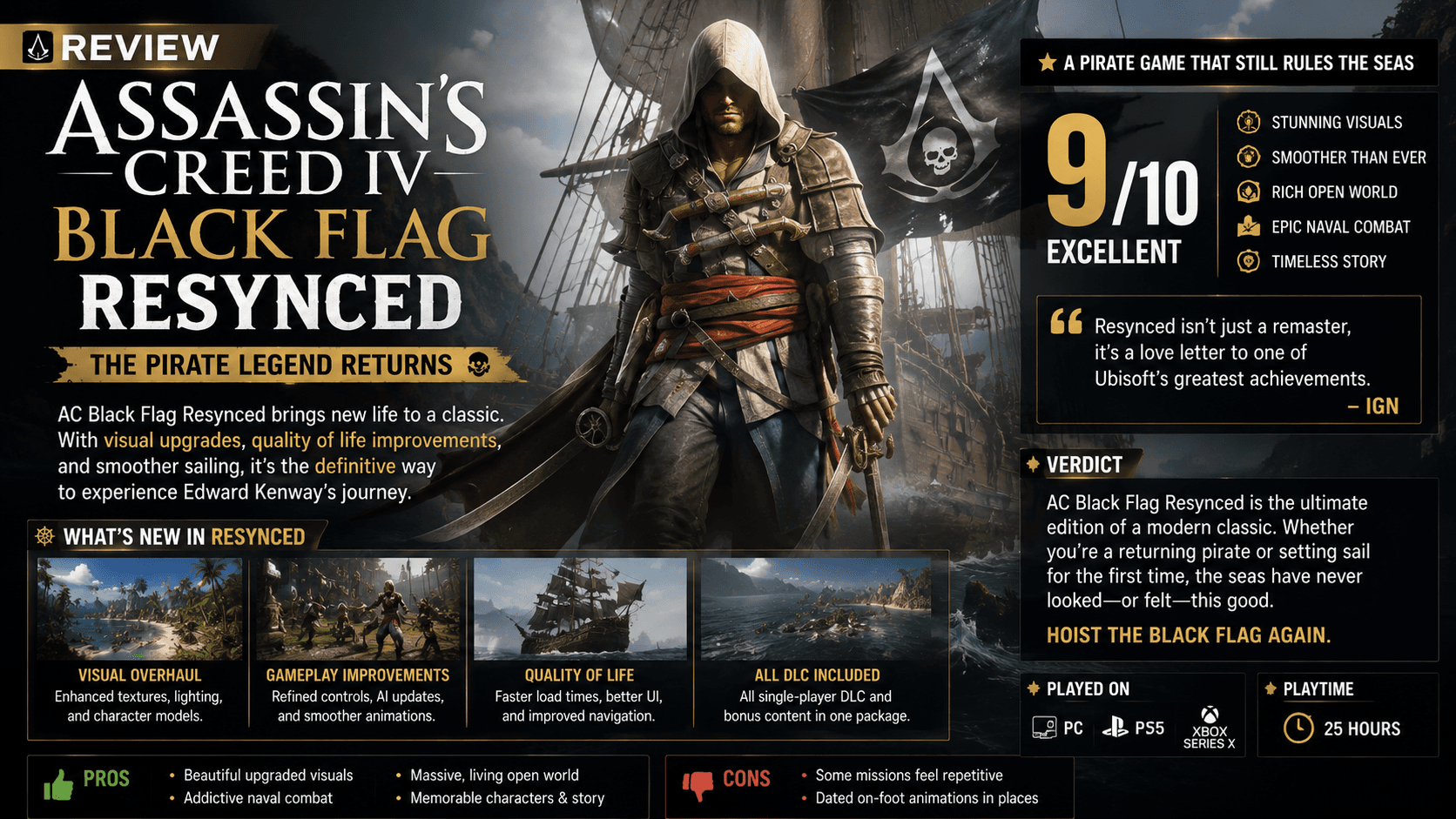
Step back and look at the full 2026 gaming calendar and a pattern emerges that has not been this pronounced in any previous year — major game remakes are everywhere. Assassin's Creed Black Flag: Resynced launched July 8 and sold 2 million copies in 24 hours. Halo: Campaign Evolved launches July 28. The Legend of Zelda: Ocarina of Time remake was confirmed for a 2026 launch on Nintendo Switch 2. GTA 6 itself is in some ways a thematic remake of Vice City, returning to a location the franchise has not visited since 2002. Game Rant has called it explicitly: 2026 feels like "a different beast" for remakes, unlike any year before it.
Why This Year Specifically
Two converging forces explain why 2026 is the year remakes peaked. The first is demographic — the generation that grew up with the Nintendo 64, the original Xbox, and the PlayStation 2 in the late 1990s and early 2000s is now between 30 and 40 years old. They have disposable income, nostalgia, and children of their own who they want to share these games with. Publishers have noticed. The second force is economic — original AAA game development has become extraordinarily expensive and risky. A remake of a beloved classic carries significantly less financial uncertainty than an original IP. Black Flag Resynced's 2 million copies in 24 hours validates this calculation completely.
The Three Biggest Remakes of 2026
Black Flag Resynced is the year's first major remake success — 2 million copies in 24 hours at an 8.25 Metacritic score. Halo: Campaign Evolved arrives July 28 on Game Pass with a full Unreal Engine 5 rebuild of gaming's most iconic first-person shooter opening act. Zelda: Ocarina of Time launches later in 2026 as what appears to be a full ground-up remake of the highest-rated game in Metacritic history. Three remakes spanning Ubisoft, Microsoft, and Nintendo all in the same year, all targeting the same nostalgia-driven demographic of players who experienced the originals in their childhood.
Is the Remake Trend Good or Bad for Gaming?
The debate is genuine and worth having. On the positive side, remakes make classic games accessible to new generations with modern technology, preserve cultural gaming heritage, and often introduce meaningful quality-of-life improvements that make older games more enjoyable. On the negative side, heavy investment in remakes means fewer resources for original IP, contributing to a creative stagnation in the AAA space that many critics have noted. The companies most aggressively pursuing remakes — Ubisoft, Microsoft, Capcom — are often the same ones cutting development staff and reducing original IP investment simultaneously.
What This Means for Indian Gamers
For Indian players across different age groups, 2026's remake wave offers genuinely compelling content at multiple price points. Black Flag Resynced is available now at approximately ₹3,499. Halo: Campaign Evolved is free on Game Pass from July 28. Zelda: Ocarina of Time will arrive on Nintendo Switch 2 later this year. None of these require the ₹54,990 PS5 investment that GTA 6 demands — making them accessible to a much wider segment of Indian gaming audiences. If you are waiting for GTA 6 but want something substantial to play in the meantime, any of these three remakes is an excellent choice.
My Take
2026's remake wave is not a symptom of creative bankruptcy — it is a natural maturation of gaming as a medium. Cinema has been remaking classics for a century. Literature republishes and reimagines foundational texts across generations. Gaming doing the same with Ocarina of Time and Halo is the franchise equivalent of a restored print of a classic film — the original context, rebuilt for a contemporary audience. The question is not whether remakes should exist. It is whether the industry is using them to complement original creativity or replace it. Right now, in 2026, the answer feels uncomfortably like the latter.